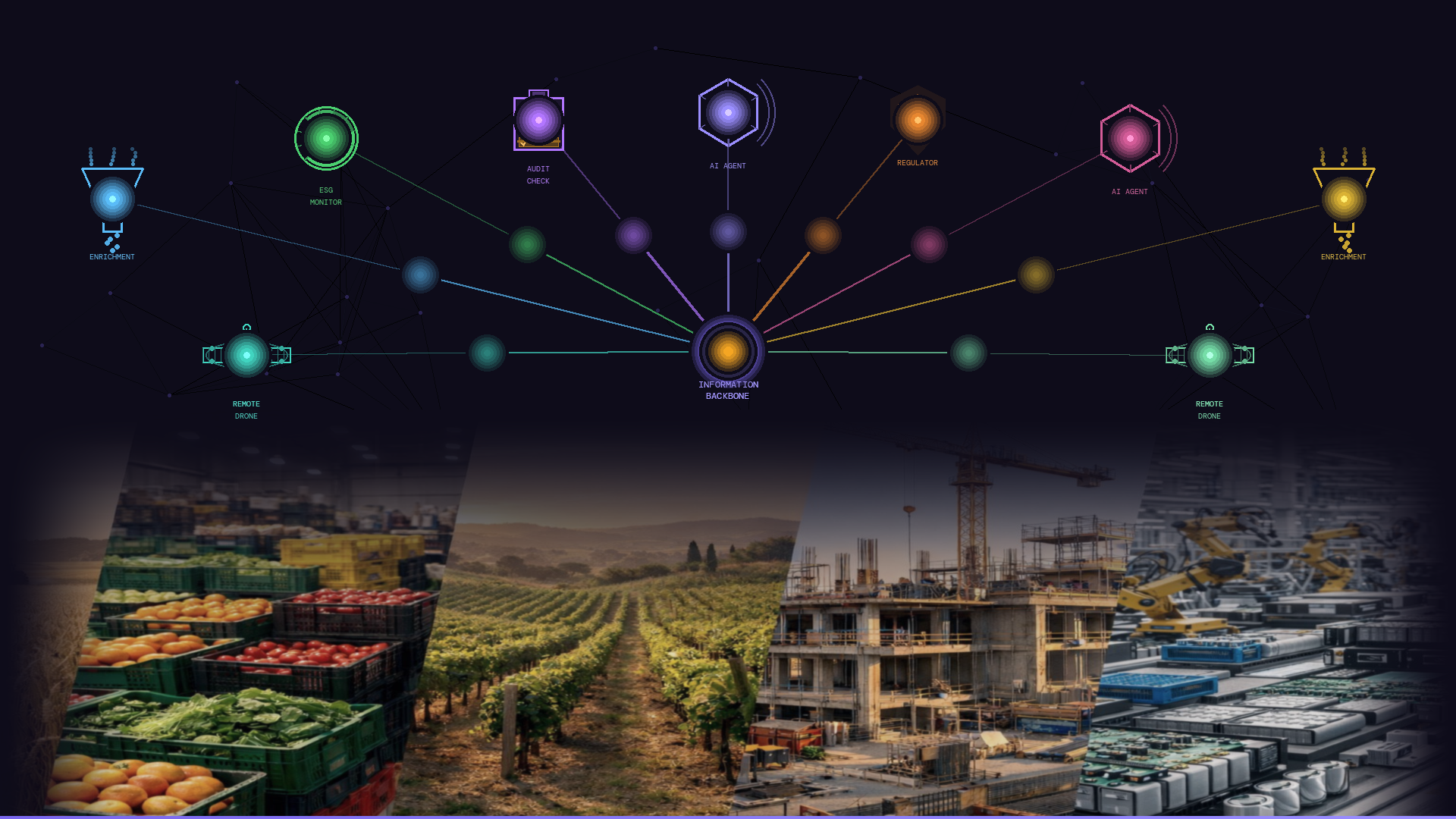
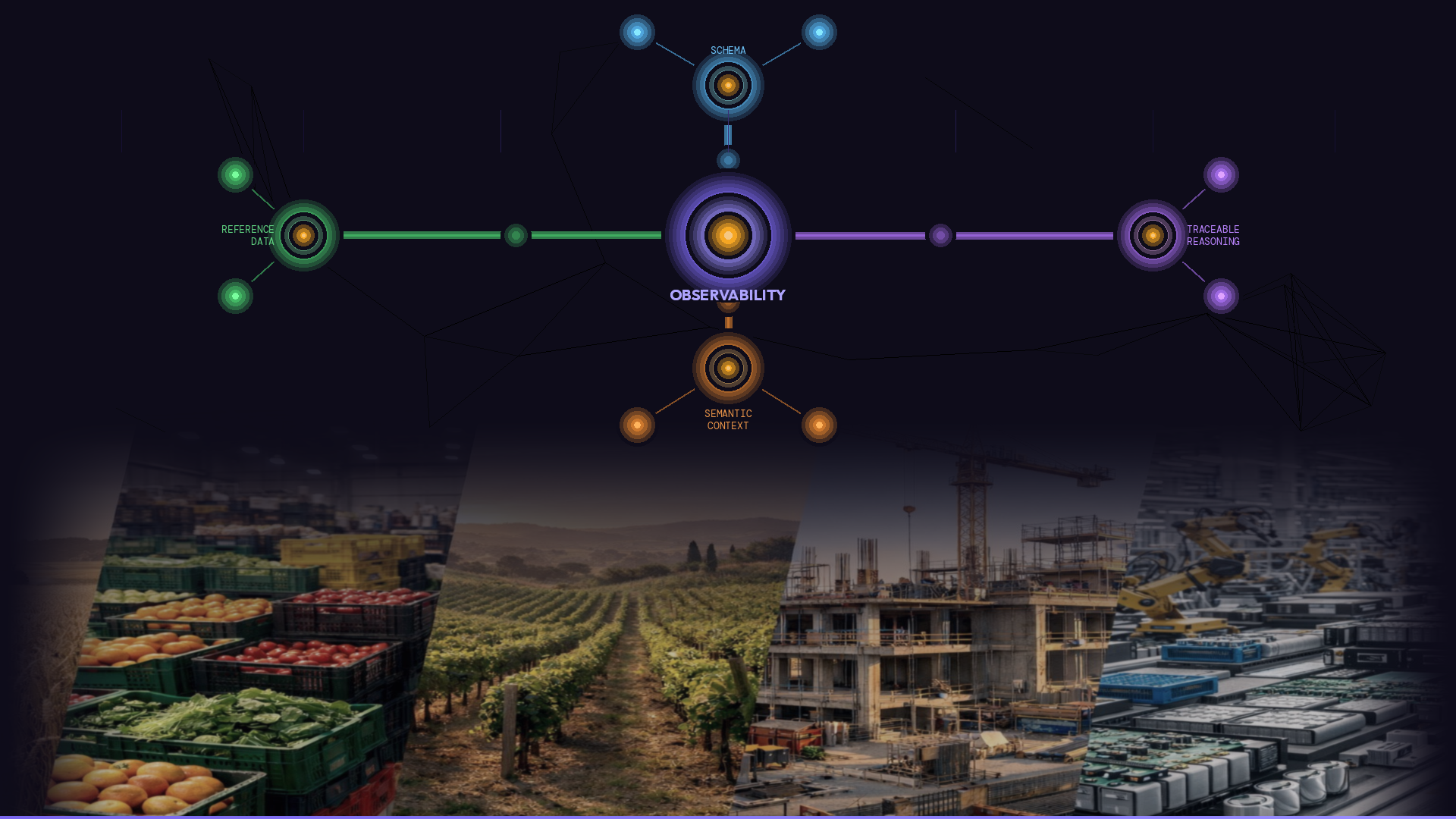
AI observability is not a monitoring problem. It is a foundation problem.
When an AI system produces an output - a classification, a compliance summary, a product recommendation - the only way to verify it is to trace it back to the meaning it was built on. If that meaning was assembled at query time from ungoverned sources, there is nothing to check it against. You can review the output. You cannot audit it.
If your AI outputs can't be checked against a governed reference, you don't have observability - you have review. And in high-trust environments, review doesn't scale.
This is the distinction that matters in regulated and compliance-heavy operations. Observability means being able to ask: where did this answer come from, what governed meaning does it reflect, and can I defend it under scrutiny? That question only has a reliable answer when the AI is consuming from a governed information backbone - where relationships are explicit, reference data is maintained, and every output can be traced to a verified source.
The posts in this section explore what real AI observability requires, why context assembled at query time is not a substitute for governed meaning, and how organizations building on a proper information backbone gain something monitoring tools alone cannot provide: the ability to stand behind their AI outputs with confidence.
 Matt Shearer