There is a lot of talk about putting AI on top of data. Most of it disappoints, and the reason is rarely the AI model. The Large Language Models are extraordinary. The problem is that the data underneath was never connected, so the AI has nothing solid to reason over. It retrieves fragments and assembles something that sounds right. Confidently, and often wrong.
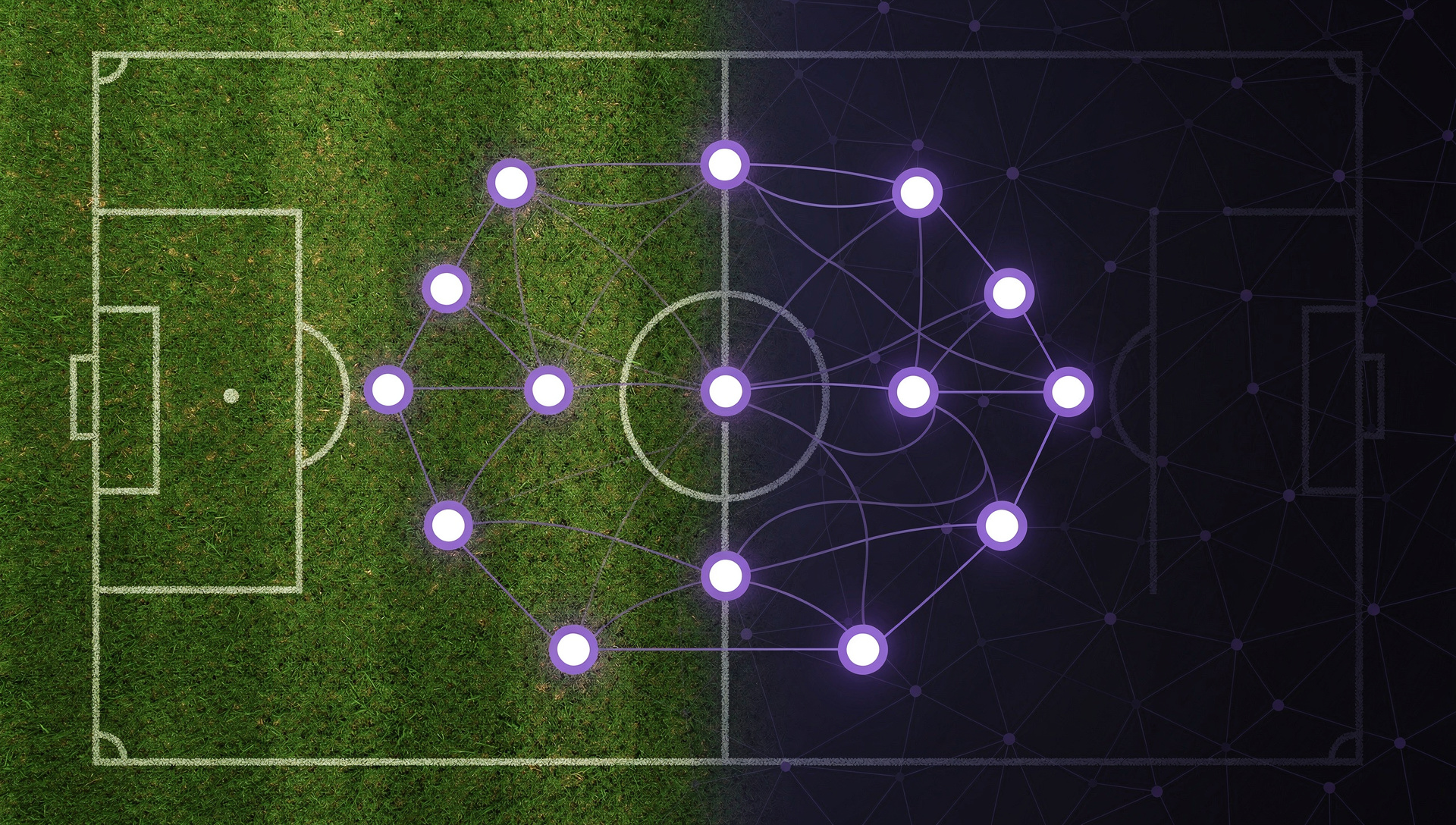
I wanted to show the alternative in a way anyone could follow, so we built one. We modeled the entire FIFA World Cup 2026 as a knowledge graph in Data Graphs, then put a series of increasingly demanding questions to the AI. Football is the demo. The point applies to any organization sitting on data it cannot yet reason across.
Here is how it unfolded, across four short videos: model the world, reason over it, check the reasoning, then create from it.
First, model the world
Everything starts with the model, so the first video is a walkthrough of it:
We used the IPTC Sport Schema, an open standard for all sports that describes the full structure of a competition: the stages and fixtures through to the final, the players, teams, managers, and officials, and how each participates in a match. A competition contains events. An event is a match. Actions are everything that happens on the timeline of that match, the goals, shots, cards, and substitutions. Statistics are captured through participation records. We extended the model slightly to handle editorial content and to represent venues.
Then we fed it a live data feed from Sportmonks, whose data aligns closely with the IPTC model, which made ingestion straightforward. The result is a living knowledge graph of the whole tournament, where every data point is explicitly connected to the things it relates to.
That word, explicitly, is the whole game. In most systems, the relationships between records are implied, buried in application logic or in someone's head. In a knowledge graph they are modeled directly, typed, and available for anything to traverse. Including an AI.
Then, ask it something hard
The second video is where it gets interesting. I asked the Data Graphs AI to predict England's starting eleven for their Round of 32 match against DR Congo, drawing on everything in the graph: every previous England match, individual player performances, formations, team outcomes, and DR Congo's likely shape. And to show its reasoning.
Watch what it does. First it queries the schema itself, so it understands the data structures and how to write against them. Then it pulls the data, using hybrid GraphRAG, writing queries in GQL and OpenCypher to gather the matches, the player performances, and the stats into context. Then it reasons across all of it.
It returned a full lineup in a 4-2-3-1, with a defense of every pick. It explained why 4-2-3-1 over 4-1-4-1. It explained why one winger over another. It even factored in how DR Congo were likely to set up and chose the shape to counter it.
Two things matter here beyond the answer. The AI does not send your data out to a public model. It runs across the knowledge graph itself as the context layer. And every claim it makes is cited back into the graph, so the reasoning is grounded and auditable, not a black box.
Then, check whether it was right
This is the part most demos quietly skip. In the third video, once the match had been played, I asked the AI a simple follow-up. Compare the predicted lineup with the actual starting eleven.
It got the formation right, and 8 of the 11 players correct.
The entire spine of the team was predicted correctly: the goalkeeper, both center-backs, the left-back, both central midfielders, and the striker. The three misses were all in the wide areas, the right-back and both wingers. And the AI noticed the pattern itself, pointing out that the manager's changes were all out wide, a different fullback and different wingers on each flank.
I find that result more compelling than a perfect score would have been. The reasoning held where reasoning can hold, on the structural core of the side that follows from form and fitness. It differed exactly where a coach exercises discretion on the day, in the wide, tactical choices no historical data can fully anticipate. The AI was not guessing. It was reasoning from reality, and reality includes a human manager's judgment.
Then, create from it, and put the result back in the graph
Analysis is only half of it. After a nerve-wracking England win, the fourth video shows the same graph driving creative editorial, and this is the step that ties everything together.
I gave the AI a single instruction: use all the data from the match, the individual player performances, the actions across the timeline, and the team performance, and write a match report in the style of a seasoned football commentator. Then create an Article for it and tag it with the event, the teams, the key players, and the goal actions.
It starts the same way every time. It reads the domain model, understands the data structures, writes its queries, and pulls the match data together, the goals, the player participations, the timeline. Then it writes the report.
But it does not stop at text. It works out what an Article entity looks like in the graph and where it should live, generates the title, summary, and body, and tags the article with the entities that matter, referencing the actual goal actions from the match. The output is not a document sitting beside the data. It is a new, fully connected concept written back into the knowledge graph.
Then I asked for a hero image. A second prompt: create a photorealistic hero image for the article, inject it into the article, and render no text. It generated the image and placed it into the article concept.
View that concept in the graph and there it is, in the editorial section: a complete match report with a summary and a hero image, all generated from knowledge graph data used as context, and fully tagged back to the events, teams, players, and goals it describes.
That last part is what makes it more than a party trick. The AI did not just produce editorial. It produced structured, connected, reusable data. The next question anyone asks the graph can now traverse this article too.
Football is the demo. The method is the product.
I chose the World Cup because it is current, and everyone understands a team sheet. But nothing about this is specific to sport.
Swap the tournament for plant protection products and their regulatory labels, and the same structure lets an AI reason across formulations and jurisdictions. Swap it for a broadcaster's media library, a museum's collection, or digital product passports traced across a full lifecycle, and the principle holds without modification. If the data exists, and in most organizations it already does, the world it describes can be modeled. And once it is modeled, AI can reason across it, and create structured knowledge back into it.
This is what I keep coming back to in conversations with organizations of every kind. Your data is fine. Your systems are fine. What is usually missing is the model that connects them, the governed context layer that turns fragmented records into a domain an AI can navigate, query, and defend its answers against.
Get that right, and the AI stops predicting what an answer looks like. It starts working out what the answer is, and it can write the story afterward.